

FeedMakr treats RSS as infrastructure. You create the original post inside FeedMakr, attach it to the right persona or client, and let clean, branded, machine friendly feeds push that content across Web 2.0, social, and partner sites without copy paste chaos.
This is not one more plugin bolted onto a CMS. FeedMakr sits upstream from everything. It is the place where content starts, where lanes and personas are assigned, and where your syndication map actually lives. Every post you publish becomes a structured asset that your entire stack can subscribe to.
If you are already using tools like Zapier, Make, N8N, or IFTTT, FeedMakr is the missing piece between your ideas and your automations. Instead of scraping random feeds or hacking together one off integrations per client, you publish once from FeedMakr and let the infrastructure do the heavy lifting.

Most platforms treat RSS like a checkbox in the settings menu. Turn it on, forget about it, hope nothing breaks. FeedMakr flips that on its head. For us, RSS is the wiring between your content and the rest of the web. It is not decorative. It is structural.
Inside FeedMakr, every post you publish is instantly:
That means your tools are not guessing. AI crawlers, syndication partners, and automation platforms see a consistent, machine readable stream of titles, links, summaries, and identity signals that you designed on purpose.
You are not asking, "What can I do with the feed my CMS happens to generate?" You are saying, "Here is the infrastructure layer that defines how my brands and clients speak to the world."
If you are an internet marketer or you run an SEO agency, you are not struggling to create content. You are drowning in it. The real problem is that it is scattered across sites, platforms, and half finished automations with no single origin and no consistent rules.
A single campaign can mean:
At a small scale, you can brute force your way through it. At ten brands or twenty clients, brute force becomes burnout. You spend more time feeding the system than the system spends feeding you.
That is why FeedMakr starts with a simple rule: there is one place where the story begins, one canonical version of every post, and one set of lanes and feeds that everything else listens to.
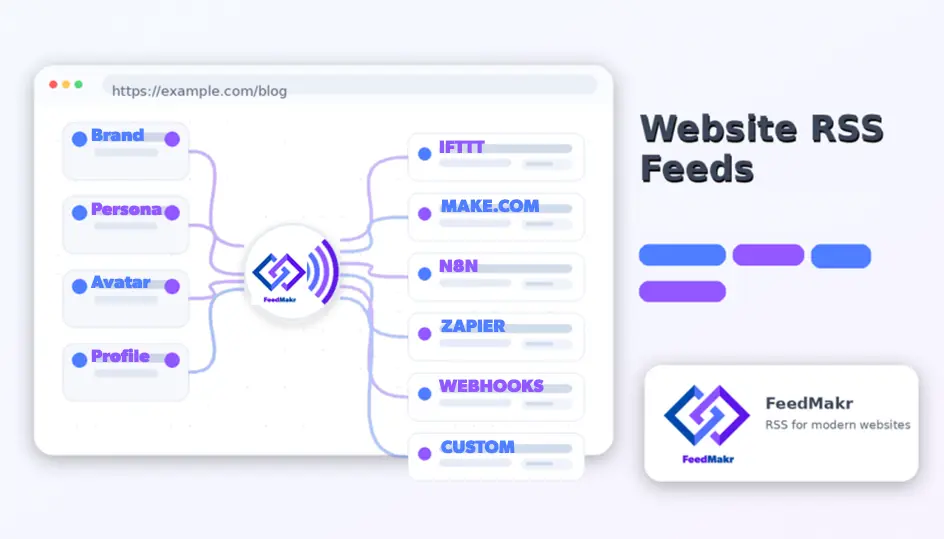
FeedMakr is built around a model that finally matches how serious marketers think:
Instead of pulling content from a dozen random sources, your stack pulls from one. Instead of rebuilding the same campaign logic for every platform, you build it once in FeedMakr and let your tools listen to the right lanes.
AI facing hubs, topic lane pages, and Web 2.0 properties all become destinations on your map, not separate worlds you keep trying to sync by hand.
FeedMakr is not for hobby bloggers who publish twice a year. It is built for people who live in this stuff every day and earn money from it.
You run several brands, each with its own voice and audience. Maybe you publish under different personas. Maybe you manage a mix of main sites, microsites, Web 2.0 properties, newsletters, and social profiles that always seem to need one more update.
With FeedMakr, you work from a single cockpit. You publish once for each persona, FeedMakr routes that post into the correct lanes, and your automations handle the rest. Your brands stop competing for your attention and start sharing the same syndication engine.
If you run an agency, every new client adds more complexity to your publishing stack. Different niches, different sensitivities, different SERP problems, and a lot of fragile glue holding it all together. One broken feed or automation can quietly derail an entire campaign.
FeedMakr gives each client a clean syndication backbone. You define their personas, their lanes, and their canonical posts inside FeedMakr, then expose safe, structured feeds for reputation work, content hubs, and partner placements. You stop reinventing the system per client and start plugging clients into a system that already works.
Concepts are nice. What matters is what happens the next time you sit down to ship a campaign. Here is how FeedMakr changes the shape of a normal workday when you treat it as your publishing cockpit and RSS as your infrastructure.
You have three brands, five personas, a few Web 2.0 properties, and a social queue that never sleeps. Before FeedMakr, every new piece of content meant detective work. Where did we post this last time? Which Google Doc is the final version? Did anyone update the automation for this campaign?
With FeedMakr, you start in one place:
At that moment, FeedMakr quietly does the hard work for you:
Your Zapier, IFTTT, N8N, or Make scenarios pick up the structured item and:
You did not log into six dashboards or copy a single line of text by hand. You made one decision in FeedMakr and let your syndication infrastructure follow through.
You have twenty clients, each with different risk levels, SERP problems, and content velocities. Right now, every client feels like its own private jungle of feeds, folders, and automations.
In FeedMakr, you give each client a backbone:
From there, FeedMakr maintains:
You are not rebuilding a syndication system for every client. You have one system that handles client number four the same way it will handle client number forty. Your team spends less time wrestling tools and more time choosing which stories to tell next.
You already know that AI systems and modern search do not just look at single posts. They look for structure. They want to see clear topic lanes, stable persona pages, and a hub that explains who you are and what you cover.
The problem is that hand built hubs and lane pages are fragile. They get created once, and then slowly drift out of date because nobody wants to maintain them by hand.
FeedMakr turns that into a system:
Your hub strategy becomes simple:
You end up with a structure where:
Instead of hoping AI tools figure out your content map, you hand them a clean, living directory that is updated every time you hit publish in FeedMakr.
When you treat FeedMakr as the origin, RSS becomes your content API for machines. Each feed item carries explicit signals about title, topic, persona, publish date, and canonical URL. AI systems and aggregators do not need to guess. They just read.
Inside FeedMakr you define the rules once:
That policy turns into actual behavior. Your infrastructure layer:
Instead of a cloud of disconnected URLs, your brand or client shows up as a coherent structure that machines can understand and trust.
Reputation lives on page one and two of the search results. Content syndication is how you push your side of the story into that limited space. FeedMakr is the publishing layer that makes that repeatable instead of improvised.
You can treat reputation work as a first class use case:
From there, your syndication program can:
As those placements accumulate, you are not guessing about impact. You know that:
FeedMakr gives you the levers to treat reputation management like an ongoing program, not a one time cleanup job after a bad week.
Without a map, every channel feels like a separate problem. You are always asking where does this one go, who is supposed to see it, and what version did we send last time. FeedMakr lets you design that map once and then attach posts to it as you publish.
Inside FeedMakr, your map looks something like this:
Once that logic is captured, publishing becomes a much smaller question:
You are no longer designing the pipeline every time. You are just creating posts and telling FeedMakr where they belong. The infrastructure layer handles the rest.
Next, we can walk through the specific features inside FeedMakr that make this possible, and how they work together to give you one place to publish from and many places to appear.
Inside FeedMakr: Features That Make The System Work
All of this only matters if the features line up with how you already work. FeedMakr is not a pretty skin on a single RSS feed. It is a set of practical controls that make it realistic to run many brands and clients from one cockpit.
FeedMakr starts with identity. You define personas and brands instead of faking everything through tags.
This is what lets you say with a straight face: this feed is only for Brand A, this lane only covers Topic B, and this output is safe for partner X...
In FeedMakr, you do not just publish random posts into a void. You publish into lanes.
Lanes are the backbone of AI facing hubs, microsites, and syndication programs. You stop asking what should go where because every lane already knows its own job.
A single site wide feed is not enough when you manage serious distribution. FeedMakr lets you define multiple outputs that map to how you actually syndicate.
All of them come from the same origin inside FeedMakr, so you never have to rebuild the same logic for a new channel or client. You add a feed, not another set of manual steps.
The difference between smart syndication and a duplicate content mess is policy. FeedMakr is designed to enforce the rules you decide on.
Instead of having twenty places where policy could slip, you centralize it once and let FeedMakr enforce it every time you publish.
FeedMakr is designed to play nicely with the tools you already use. It does not try to replace your full stack. It gives your stack a clean origin.
The goal is simple: when your automation platform asks "where do I listen for new content" the answer is always "this FeedMakr feed", not "that one random URL we hope nobody touches".
A serious syndication system needs a bit of governance or it falls apart. FeedMakr gives you guardrails without bureaucracy.
You can grow to more brands, more clients, and more destinations without trusting everything to memory and sticky notes.
FeedMakr did not appear out of nowhere. In 2018, it began as a FileMaker desktop app called RSS Contender, built for people who cared enough about RSS to manage it by hand if they had to. The early adopters were power users long before AI and syndication maps became buzzwords.
Over time, the same pattern kept showing up. The people who cared about feeds the most were the ones who had the biggest problem: they were responsible for many brands, many clients, and way too many channels. That is the pain that shaped FeedMakr.
FeedMakr is that original concept, rewritten for a world of AI, content hubs, and automation heavy stacks. It keeps the seriousness of the old tool, with a cleaner interface and a much bigger idea behind it: RSS is not a checkbox. It is your infrastructure layer.
If you were part of that original crew and hold a lifetime license, you are not being left behind. You are grandfathered into FeedMakr at zero cost. You helped prove the need for this system when it was still a scrappy desktop app, and this platform is built with you in mind.
You are not buying another shiny SaaS that duplicates what your CMS already does. You are buying a publishing cockpit and a syndication backbone that sits in front of everything else you already own.
Look at where your time and money go now:
FeedMakr attacks those costs at the source. One canonical post, one map, one infrastructure layer that your whole stack can trust. The more brands and clients you manage, the more that structure pays you back.
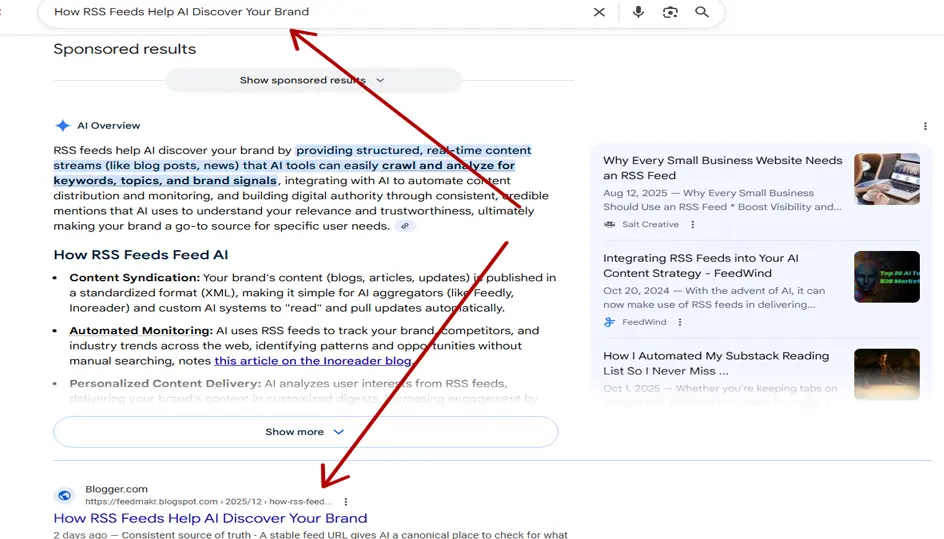
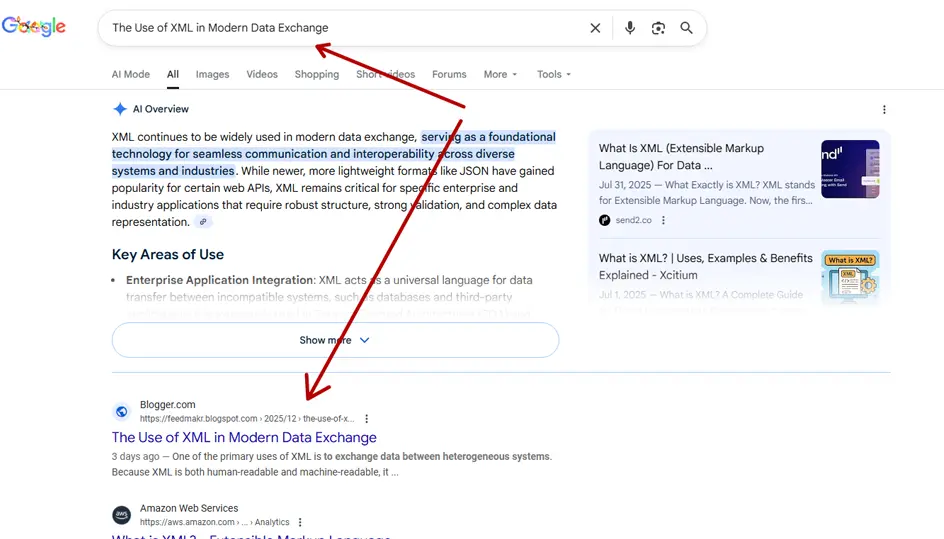
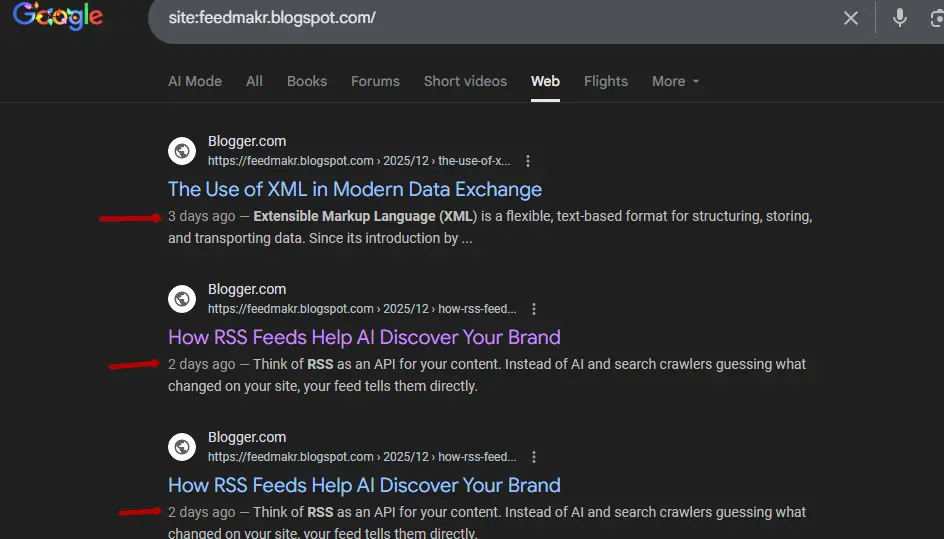
AI systems are already mediating what people see when they search, research, or ask questions about your brand and your clients. Web 2.0 properties and partner sites will keep publishing something about you, whether you direct it or not.
You can wait and keep operating on improvisation, or you can put a real origin layer in place before the next wave hits. The earlier you define your personas, lanes, and feeds, the more all future content will work for you instead of against you.
Every month you run campaigns without a proper syndication backbone, you are teaching machines and platforms a story about your brands. FeedMakr is how you start telling that story on purpose.
Old school syndication tried to blast the same article everywhere and hope something stuck. That game is over. Search is smarter. AI is smarter. Your clients are smarter. FeedMakr gives you automation that respects that reality and still saves you a ridiculous amount of time.
In FeedMakr, every feed lane is intentional. A lane is not "everywhere". A lane has a job. Reputation lane. Topic lane. Partner lane. Internal lane. You decide the job. Automation just executes it at scale.
Here is the flow:
The result feels very different from old school syndication. Your Web 2.0 network does not get the same thing as your social snippets. Your reputation partners do not get the same thing as your internal curation board. Each lane carries content that makes sense for that lane.
FeedMakr does not promise "one article spammed across 40 sites". It gives you something better. It lets you:
You still think like a strategist. FeedMakr just removes the grunt work between "this piece belongs in these 4 places" and "this piece is live in those 4 places with proper tracking and attribution".
If you care about what gets crawled, cached, and ranked, FeedMakr fits how you already think:
Automation in FeedMakr is not "fire and forget". It is "decide once, wire it once, then let the system carry that decision every time you publish." The work you put into your strategy finally compounds instead of getting lost in manual posting and copy paste chaos.
If you recognize yourself in this page, you are exactly who FeedMakr is built for. You are already serious about content, automation, and SEO. You just need a cleaner way to run the system.
By the time that first post appears on your Web 2.0 properties, social accounts, or microsites, you will feel the shift. You are no longer chasing the system across multiple tools. You are sitting at the origin, with RSS as your infrastructure, and the rest of the web reacting to you.
When you are ready to retire copy and paste as a career path and turn your content into an asset you can actually direct, FeedMakr is the place to start.